
Case 9 - A 46 y.o. LADY
was diagnosed with adenocarcinoma in situ on pap smear and she underwent cervical cone biopsy. One representative section.

🎯𝘛𝘈𝘙𝘎𝘌𝘛𝘌𝘋 𝘋𝘐𝘈𝘎𝘕𝘖𝘚𝘐𝘚 🎯
- Published on
HISTORY: 68/Male/Presented with patches and plaques at trunk, UL, LL with tumour-like lesion at thigh
EDUCATIONAL NOTES:
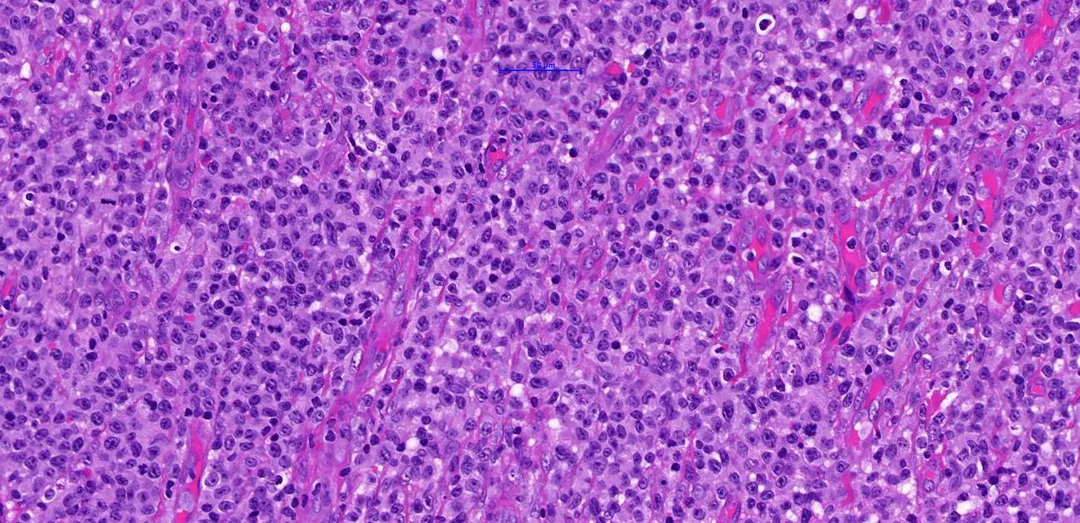
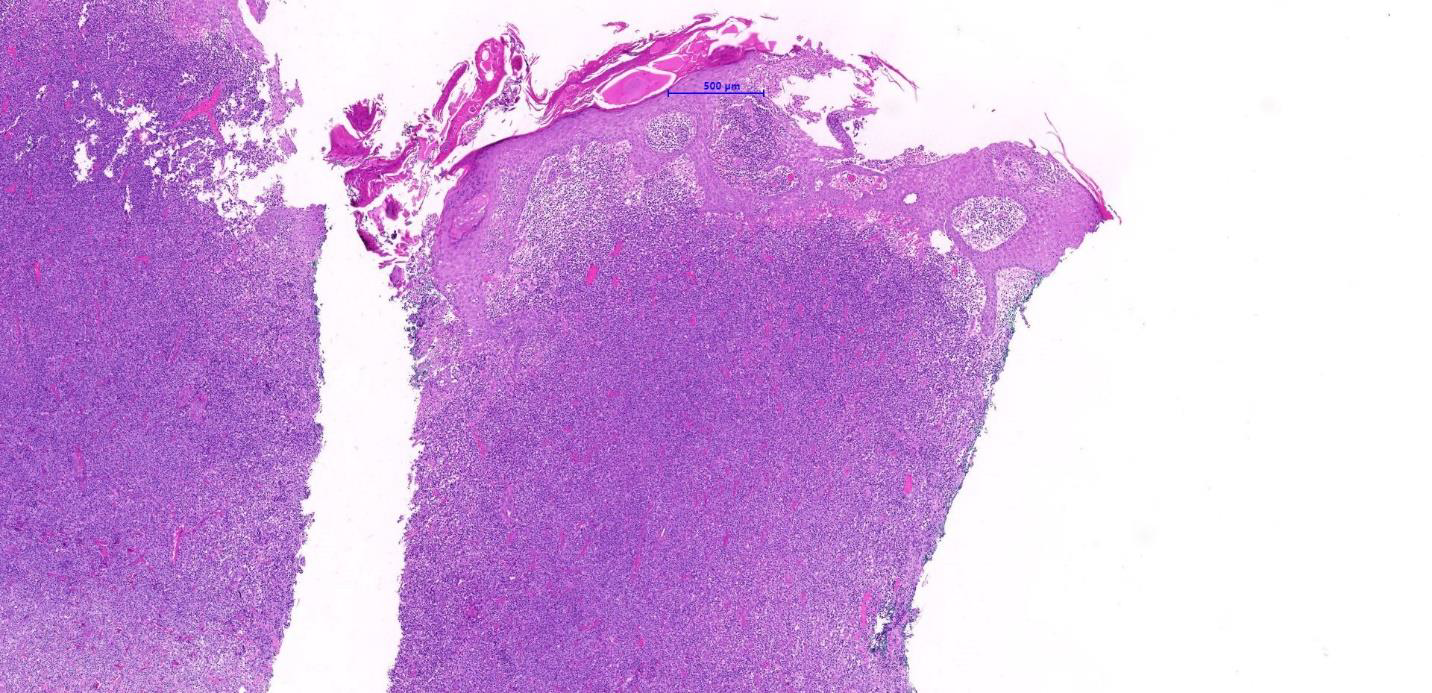
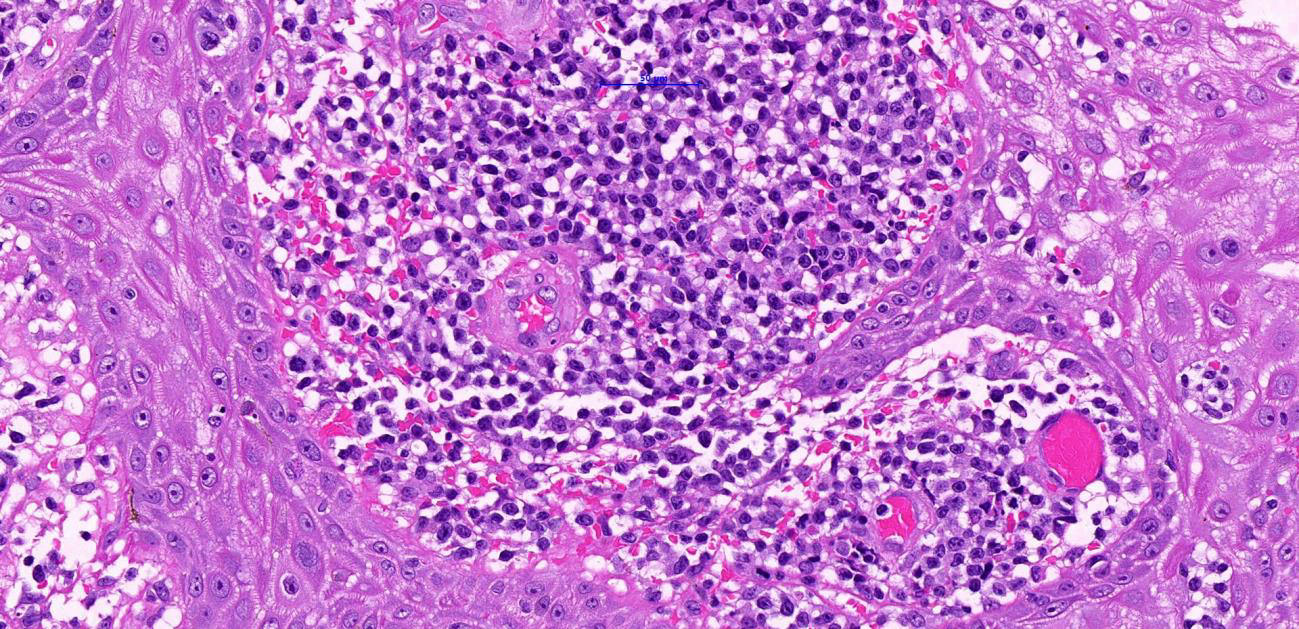
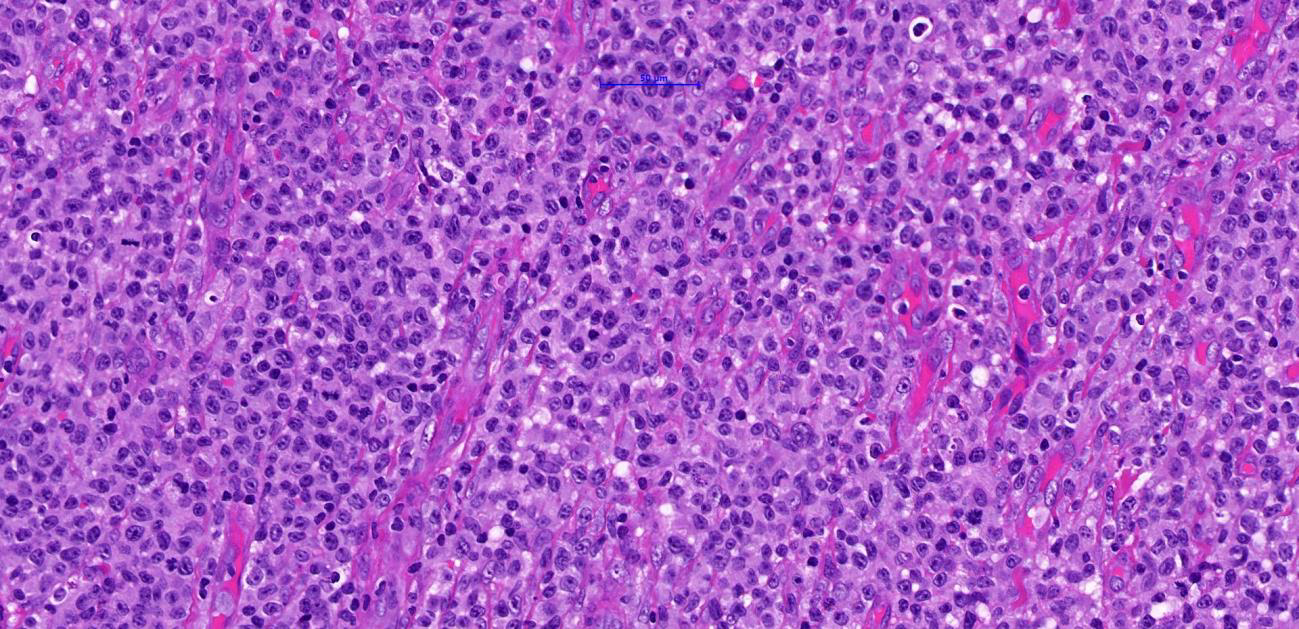
1) Section from the left thigh punch biopsy shows diffuse dermal infiltration by large neoplastic lymphoid cells arranged in solid sheets. The cells display moderate to markedly pleomorphic vesicular nuclei with prominent multiple nucleoli. The cytoplasm is eosinophilic and ample in amount. Mitotic figures are frequently seen.
Occasional histiocytes and small reactive lymphocytes are appreciated in the background.
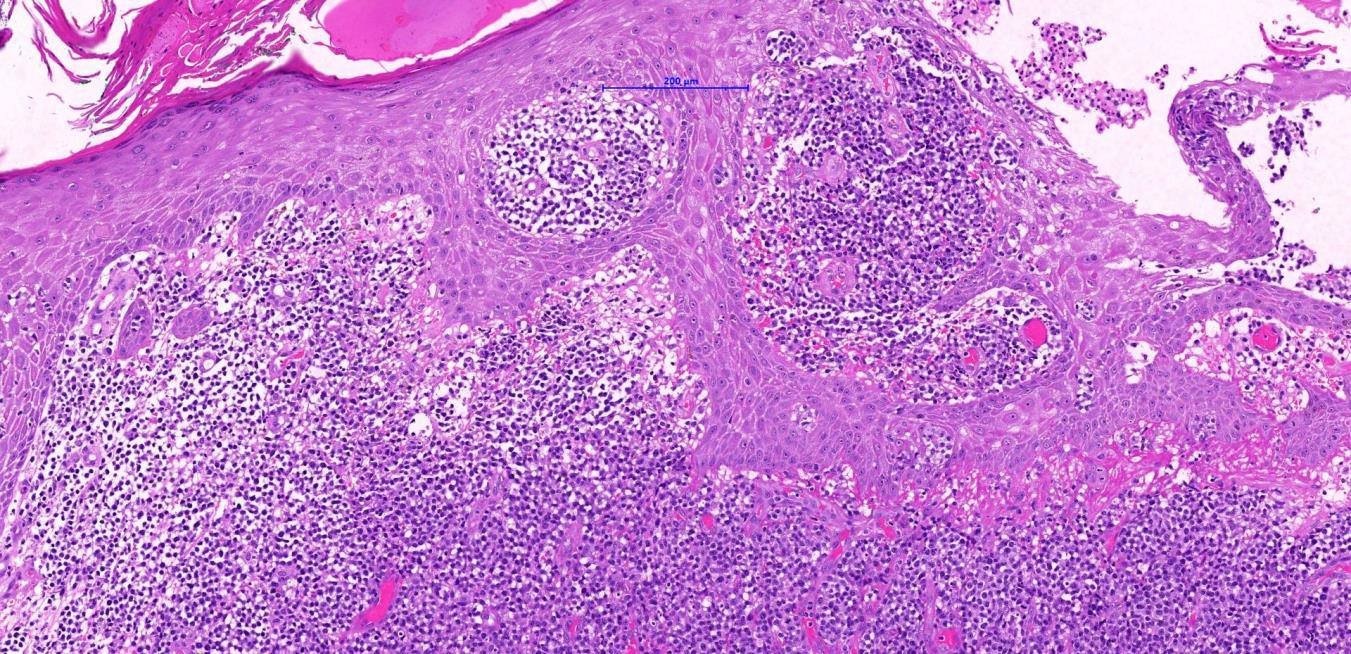
The overlying epidermis shows marked acanthosis and parakeratosis with prominent lymphocyte epidermotropism and Pautrier microabscesses. No angio-invasion or angio-destruction is seen.
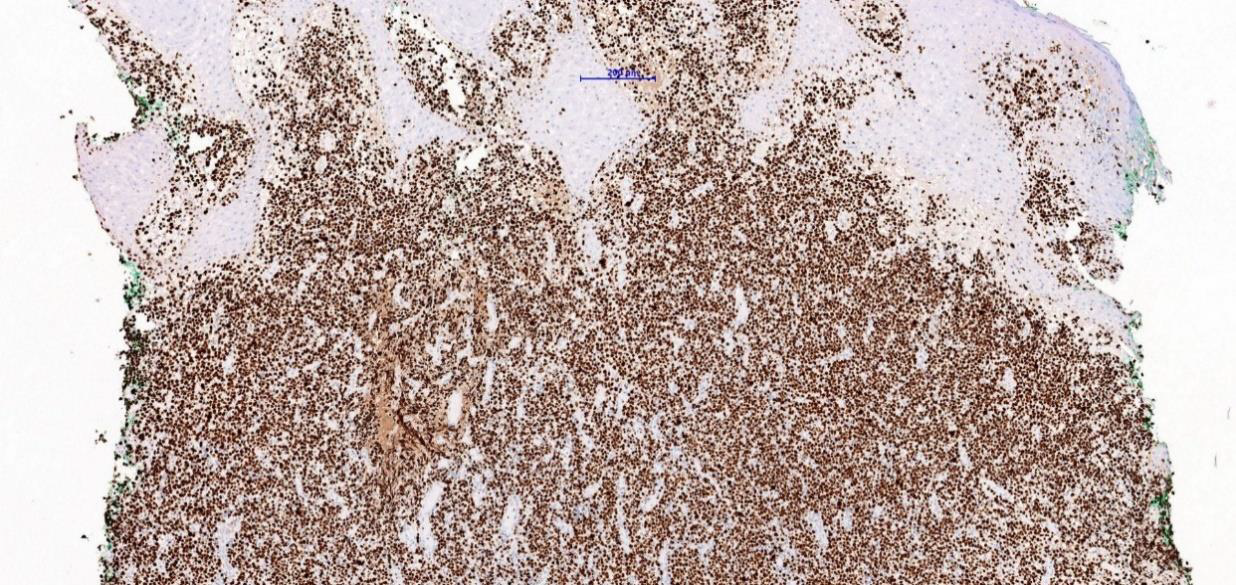
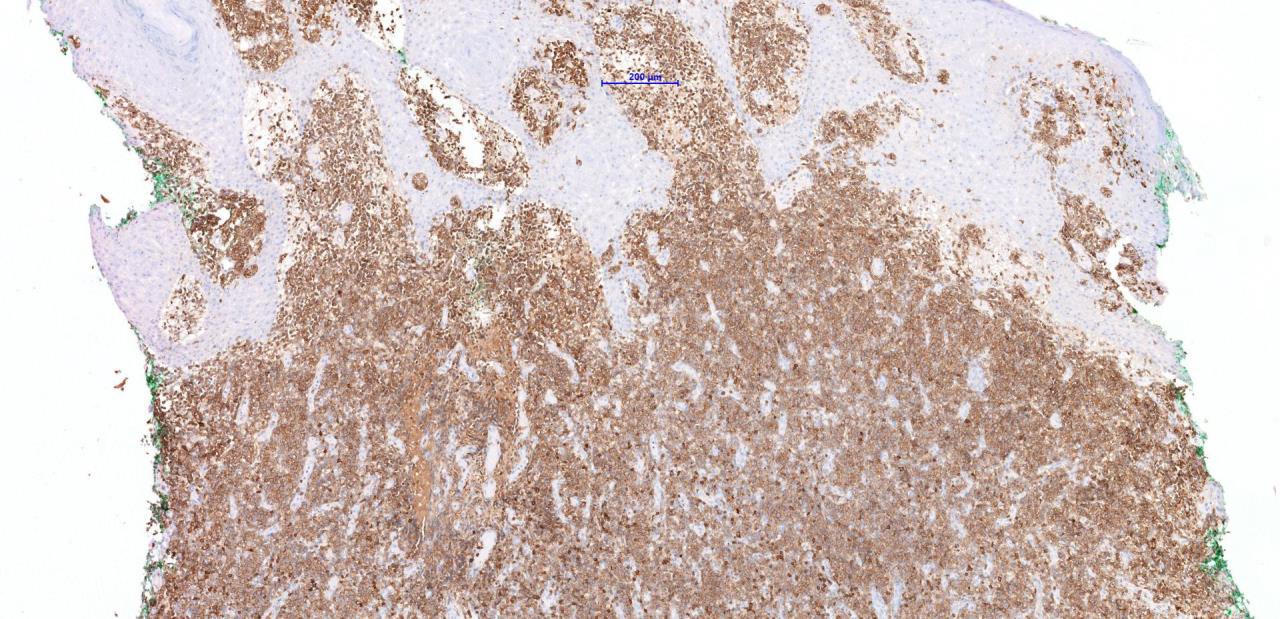
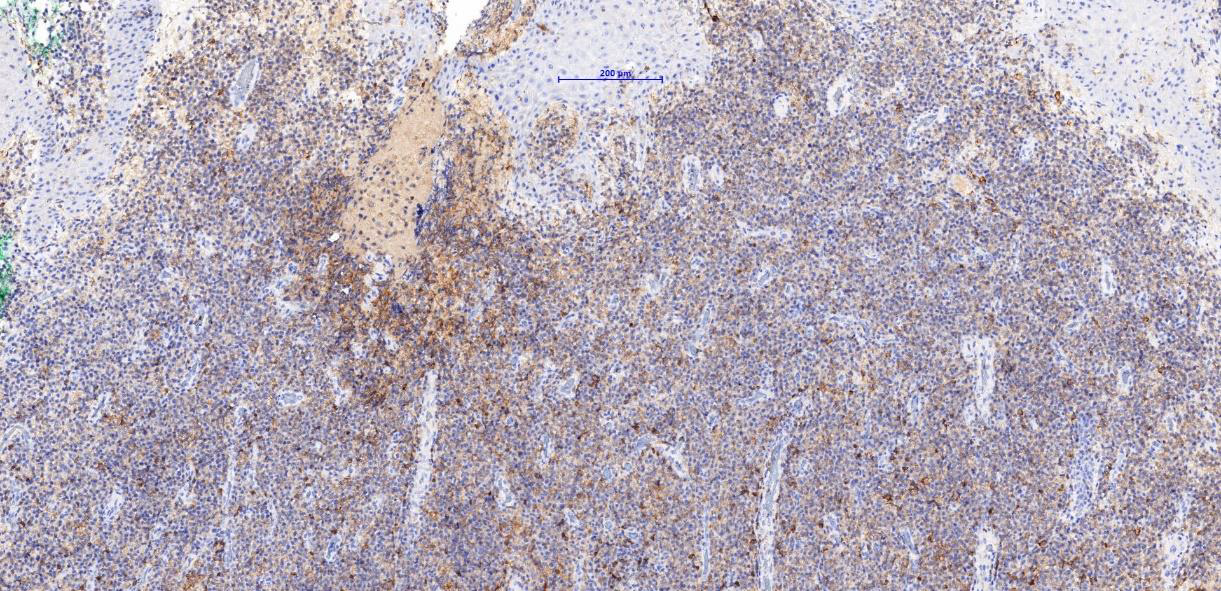
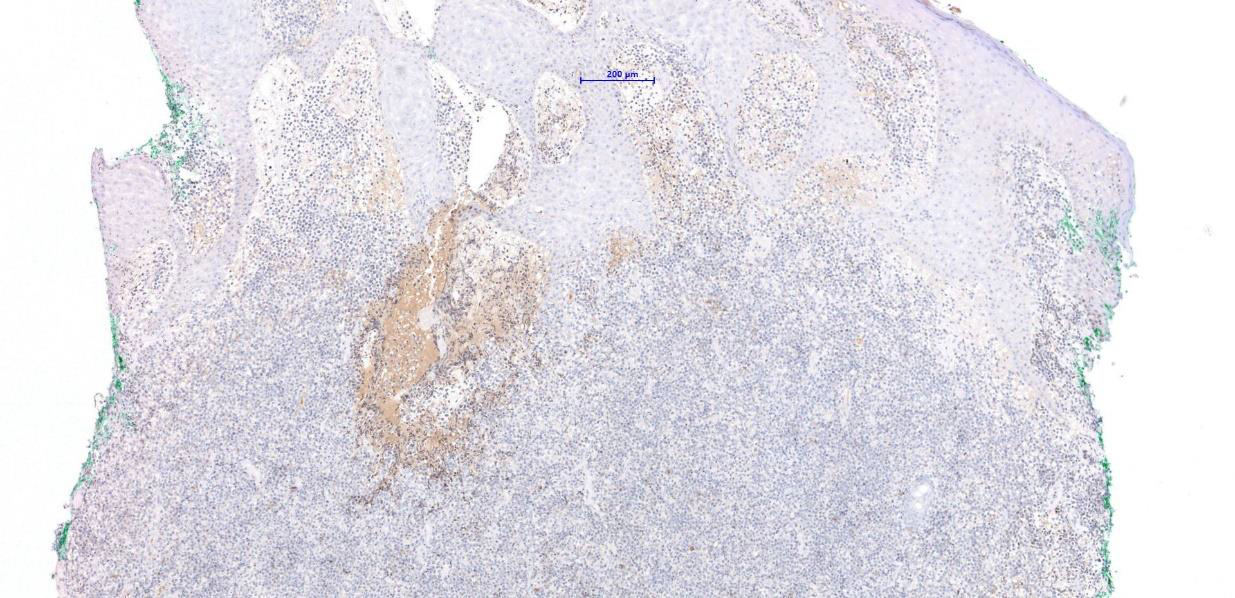
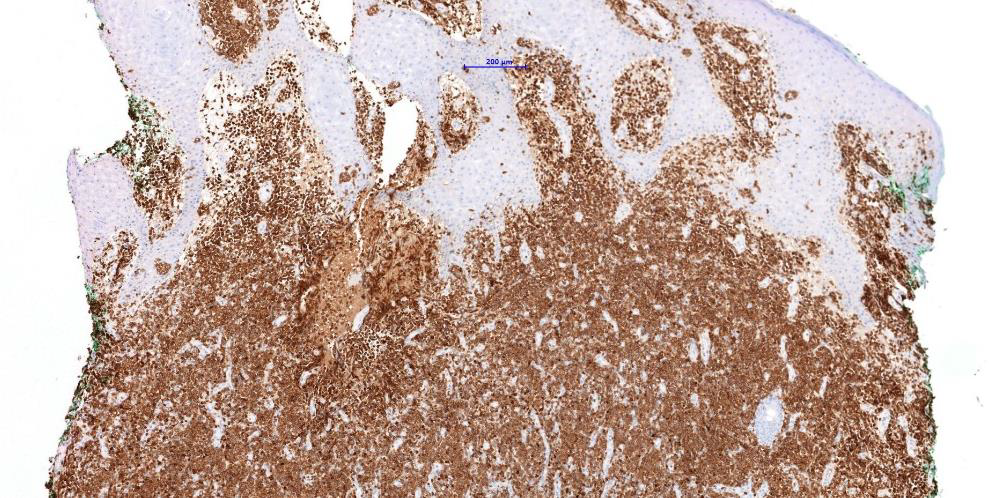
2) Immunohistochemistry study shows the neoplastic lymphoid cells are immunoreactive (+) for CD2, CD3 and CD5, with aberrant loss in CD7 and CD8. CD4 is positive (+) in a significant number of cells. CD30, ALK-1 and CD20 are negative (-). The proliferative index as estimated by Ki67 is high (>90%).
3) The evolution of patches and plaques followed by tumoral stage further supports the diagnosis of large cell transformation Mycosis fungoides (MF).
Transformation MF is defined by: -
1. Presence of 25% blastic cells (large cells, 4x reactive lymphocytes).
2. Discrete tumour cell nodule. CD30 positive cells are only seen in ~ 30-50% of cases and is not required in making the diagnosis.
4) MF is defined as epidermotropic PCTCL of small to medium-sized T lymphocytes with cerebriform nuclei. The term should only be used for classical cases (i.e evolution of patches, plaques, and tumours + variants with a similar clinical course).
5) MF is the most common subtype of CTCL, accounting for approximately half of all cutaneous lymphomas. Patients with MF most often experience a protracted clinical course in which disease patches, plaques, and tumors develop over several years or even decades.
6) Some patients, however, undergo a process of large-cell transformation (LCT) which may be characterized by a more aggressive disease course and shortened survival. Early recognition of the clinical clues associated with LCT allows the dermatologist to diagnose this entity earlier and offer patients more aggressive treatment regimens.
7) The prognosis of LCT is reportedly worse than classic MF, and the median survival from diagnosis of LCT has been cited as 37 months for patients with LCT compared with 163 months for those with more classic MF without LCT.
Other studies have reported median survivals as low as 1 month.
REFERENCES:
• Mc Kee’s Pathology of The Skin
• E. Olsen et al. Revisions to the staging and classification of mycosis fungoides and Sézary syndrome: a proposal of the International Society for Cutaneous Lymphomas (ISCL) and the cutaneous lymphoma task force of the European Organization of Research and Treatment of Cancer (EORTC). Blood (2007)
• B. Vergier et al. Transformation of mycosis fungoides: clinicopathological and prognostic features of 45 cases. French Study Group of Cutaneous Lymphomas. Blood (2000)
• WHO Classification of Skin Tumours. WHO Classification of Tumours, 4th Edition, Volume 11. Edited by Elder DE, Massi D, Scolyer RA, Willemze R
0 Comments